
 2 years ago
117
In a Supreme Court term that coincides with the 2024 presidential primary season, the justices are at the center of many of the nation’s most politically sensitive debates. At the top of the list: former president Donald Trump’s eligibility to return to the White House and a challenge to a key element of the criminal charges against him related to his efforts to overturn Joe Biden’s 2020 election victory.
Also this term, abortion is back at the court, with one case involving access to the medication mifepristone, widely used to terminate pregnancies, and another focused on emergency abortion care at hospitals. A trio of cases challenge the power of federal agencies, long a target of conservatives concerned about what they consider unaccountable government bureaucrats.
Gun rights and state laws restricting social media companies from removing certain political posts or accounts are in the mix, as well.

Here’s a look at the major cases we are tracking from now until the end of the Supreme Court’s term in June or early July. We will update the list as each case is decided, or as arguments are held in those that have not yet been heard.
Abortion medication restrictions
FDA v. Alliance for Hippocratic Medicine
Joined the majority
Dissented
Decision author
LIBERAL BLOC
CONSERVATIVE BLOC
Jackson
Roberts
Barrett
Alito
Kagan
Kavanaugh
Thomas
Gorsuch
Sotomayor
Decision author
Joined the majority
Dissented
LIBERAL BLOC
CONSERVATIVE BLOC
Jackson
Roberts
Barrett
Alito
Kagan
Kavanaugh
Thomas
Gorsuch
Sotomayor
Decision author
Joined the majority
Dissented
LIBERAL BLOC
CONSERVATIVE BLOC
Sotomayor
Jackson
Kagan
Roberts
Kavanaugh
Barrett
Gorsuch
Alito
Thomas
Joined the majority
Dissented
Decision author
LIBERAL BLOC
CONSERVATIVE BLOC
Sotomayor
Jackson
Kagan
Roberts
Kavanaugh
Barrett
Gorsuch
Alito
Thomas
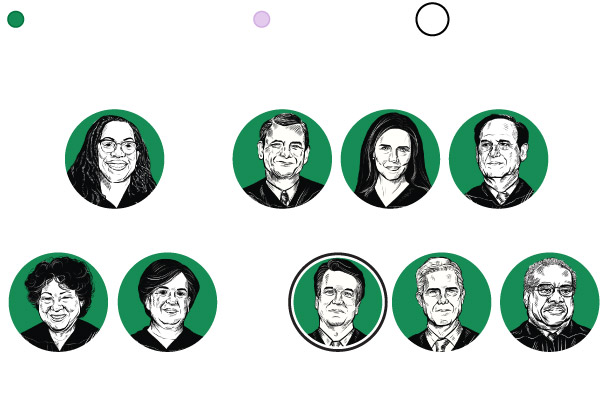
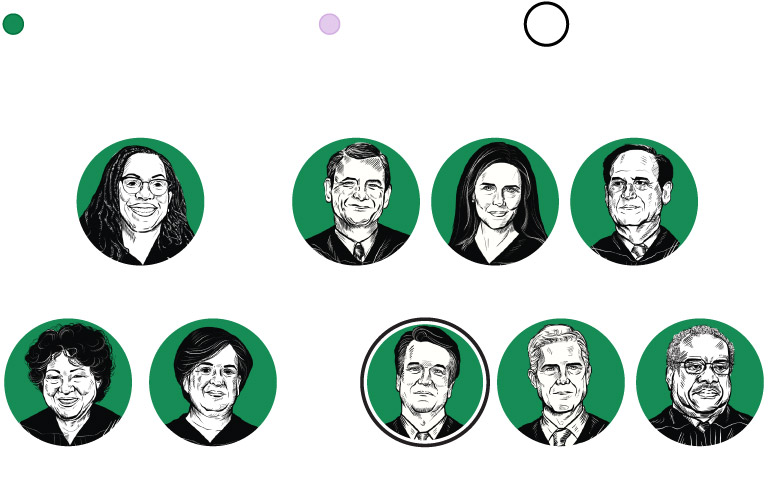
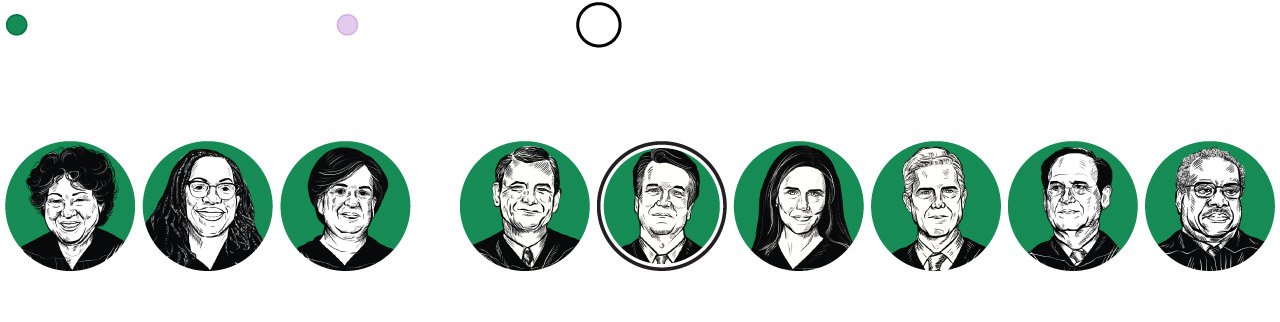
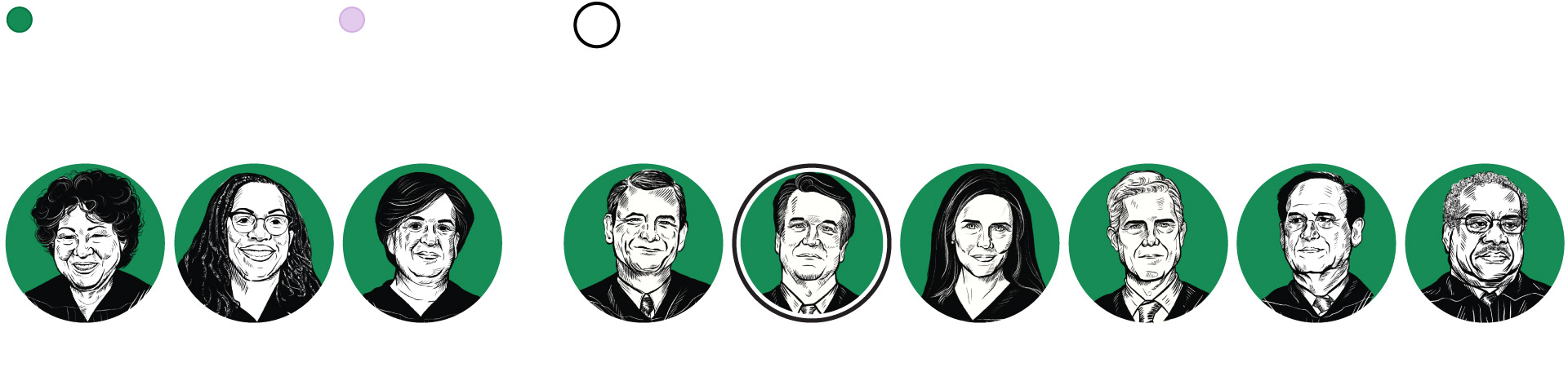
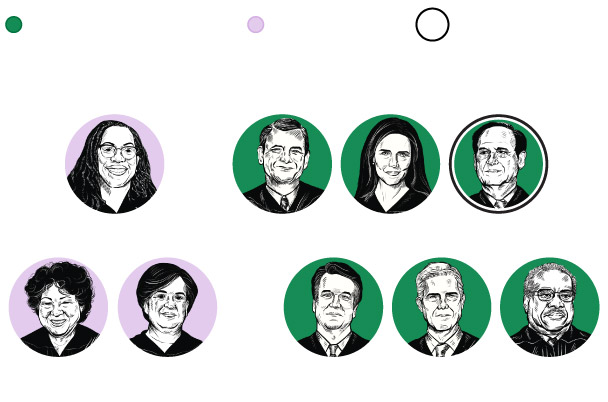
What they ruled: In a unanimous ruling, the Supreme Court refused to limit access to mifepristone, reversing a lower court decision that would have made the widely used abortion medication more difficult to obtain. The ruling was not on the substance of the case, but on a procedural ruling that the plaintiffs did not have standing to bring the case.
Why it matters: Ever since the high court eliminated the nationwide right to abortion in 2022, medications to terminate pregnancy have increased in importance and become a major target of litigation, in part because the pills can be sent by mail, including to states that have severely limited or banned abortions.
Alexander v. South Carolina State Conference of the NAACP
Decision author
Joined the majority
Dissented
LIBERAL BLOC
CONSERVATIVE BLOC
Jackson
Roberts
Barrett
Alito
Kagan
Kavanaugh
Thomas
Gorsuch
Sotomayor
Decision author
Joined the majority
Dissented
LIBERAL BLOC
CONSERVATIVE BLOC
Jackson
Roberts
Barrett
Alito
Kagan
Kavanaugh
Thomas
Gorsuch
Sotomayor
Decision author
Joined the majority
Dissented
LIBERAL BLOC
CONSERVATIVE BLOC
Alito
Sotomayor
Jackson
Kagan
Roberts
Kavanaugh
Barrett
Gorsuch
Thomas
Joined the majority
Dissented
Decision author
LIBERAL BLOC
CONSERVATIVE BLOC
Sotomayor
Jackson
Kagan
Roberts
Kavanaugh
Barrett
Gorsuch
Alito
Thomas
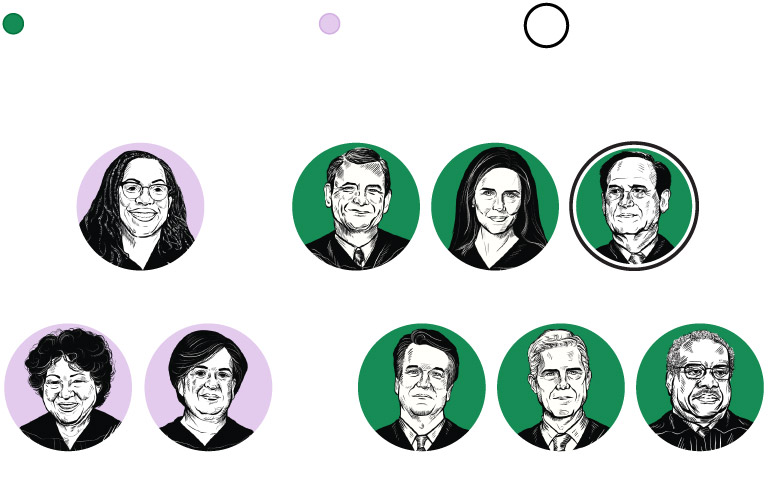
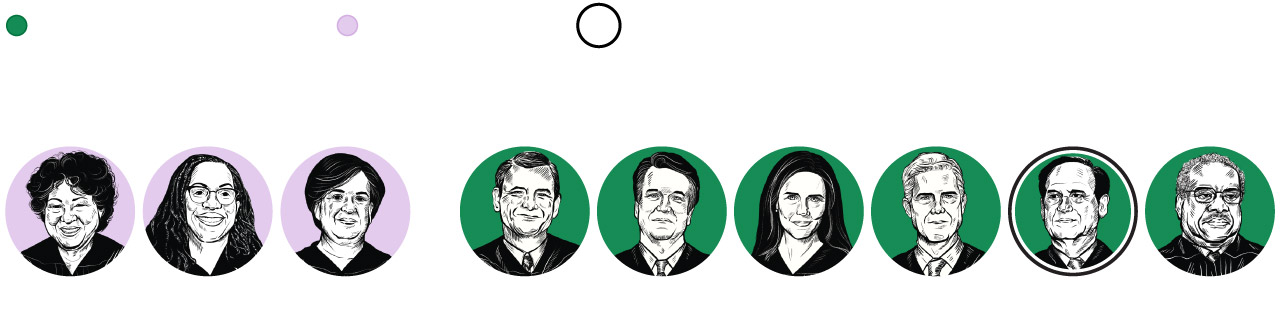
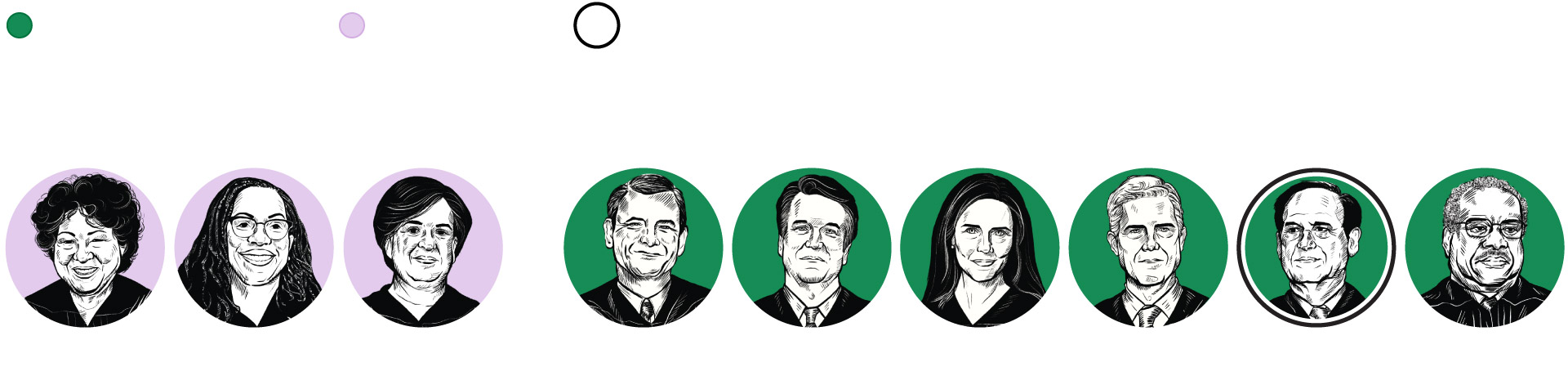
What they ruled: South Carolina is permitted to use a congressional map, created by the GOP-led state legislature, that a lower court said wrongly “exiled” Black voters from one district to another to protect a White Republican incumbent. The court’s conservative majority said those challenging the map had not proved it was motivated by race, which would be illegal, rather than by partisan politics, which is legal.
Why it matters: The case is one of several redistricting cases that have been closely watched because the U.S. House is so narrowly divided, and because the outcomes of the legal challenges could affect who controls Congress after this fall’s elections and beyond.
Consumer Financial Protection Bureau
Consumer Financial Protection Bureau v. Consumer Financial Services Association of America
Joined the majority
Dissented
Decision author
LIBERAL BLOC
CONSERVATIVE BLOC
Jackson
Roberts
Barrett
Alito
Kagan
Kavanaugh
Thomas
Gorsuch
Sotomayor
Decision author
Joined the majority
Dissented
LIBERAL BLOC
CONSERVATIVE BLOC
Jackson
Roberts
Barrett
Alito
Kagan
Kavanaugh
Thomas
Gorsuch
Sotomayor
Decision author
Joined the majority
Dissented
LIBERAL BLOC
CONSERVATIVE BLOC
Sotomayor
Jackson
Kagan
Roberts
Kavanaugh
Barrett
Gorsuch
Alito
Thomas
Joined the majority
Dissented
Decision author
LIBERAL BLOC
CONSERVATIVE BLOC
Sotomayor
Jackson
Kagan
Roberts
Kavanaugh
Barrett
Gorsuch
Alito
Thomas
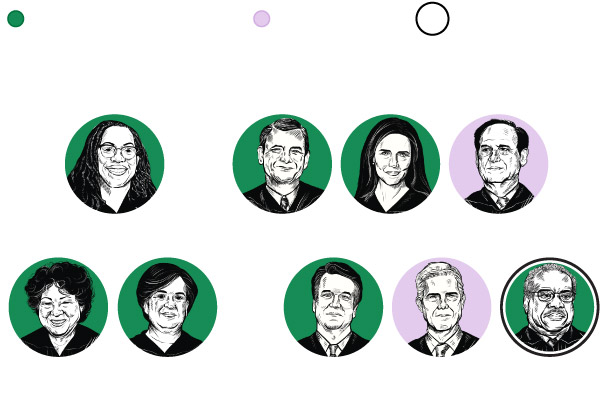
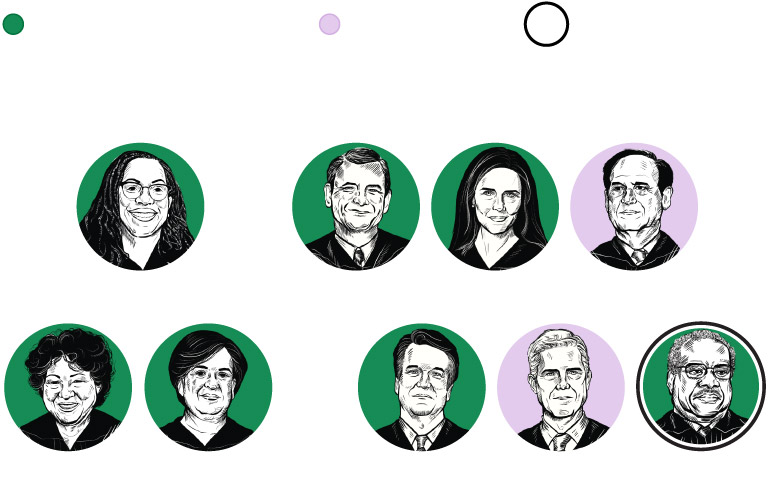
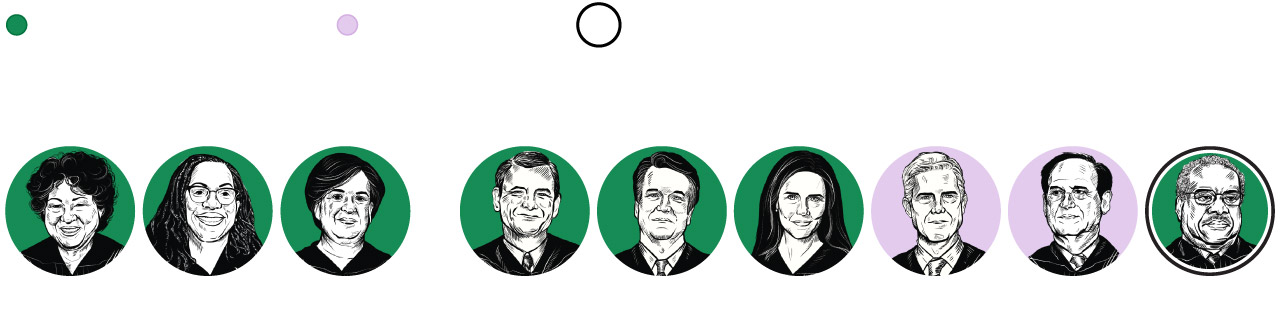
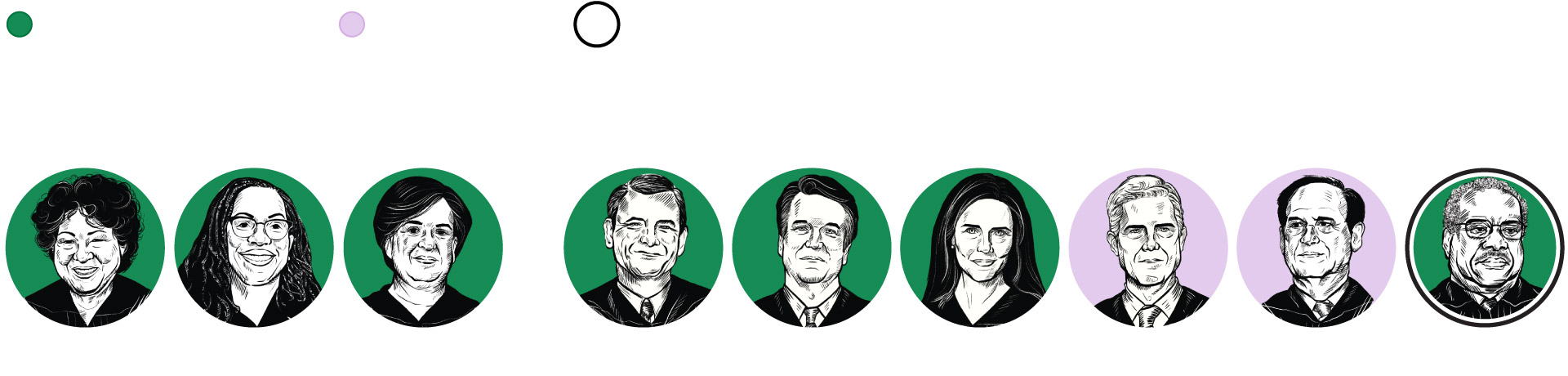
What they ruled: The funding mechanism Congress adopted to ensure the Consumer Financial Protection Bureau’s independence is constitutional and does not violate the Constitution’s command requiring congressional appropriation of money.
Why it matters: The CFPB case is one of several the high court heard this term that challenge the power of federal agencies, long a target of conservatives concerned about regulation and government bureaucrats whom they see as unaccountable to the public. The Biden administration has said that a ruling in favor of the challengers could have implications for the funding of other regulatory agencies, including the Federal Reserve Board, and could even cast doubt on Social Security and payments to the national debt.
Employment discrimination
Muldrow v. City of St. Louis
Joined the majority
Dissented
Decision author
LIBERAL BLOC
CONSERVATIVE BLOC
Jackson
Roberts
Barrett
Alito
Kagan
Kavanaugh
Thomas
Gorsuch
Sotomayor
Decision author
Joined the majority
Dissented
LIBERAL BLOC
CONSERVATIVE BLOC
Jackson
Roberts
Barrett
Alito
Kagan
Kavanaugh
Thomas
Gorsuch
Sotomayor
Decision author
Joined the majority
Dissented
LIBERAL BLOC
CONSERVATIVE BLOC
Sotomayor
Jackson
Kagan
Roberts
Kavanaugh
Barrett
Gorsuch
Alito
Thomas
Joined the majority
Dissented
Decision author
LIBERAL BLOC
CONSERVATIVE BLOC
Sotomayor
Jackson
Kagan
Roberts
Kavanaugh
Barrett
Gorsuch
Alito
Thomas
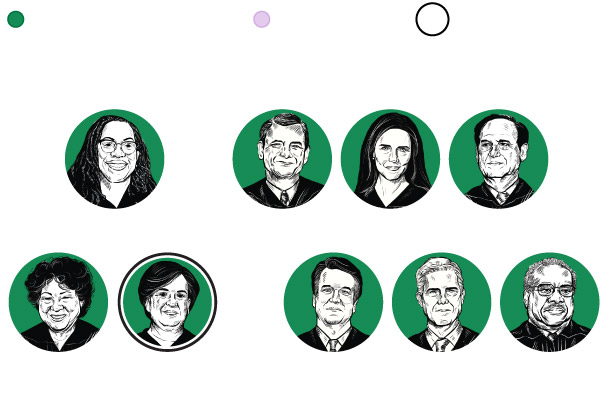
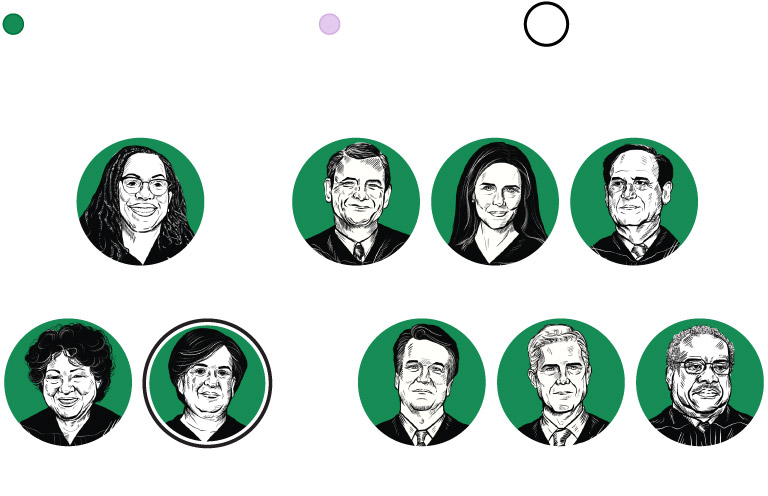
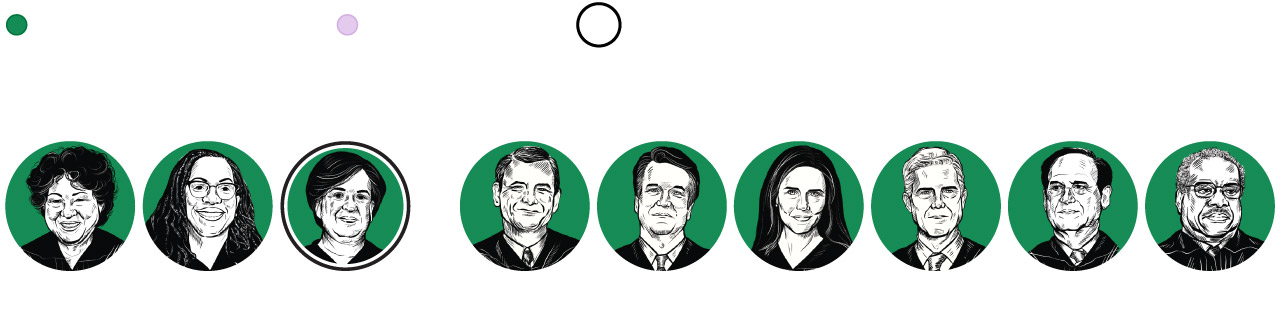
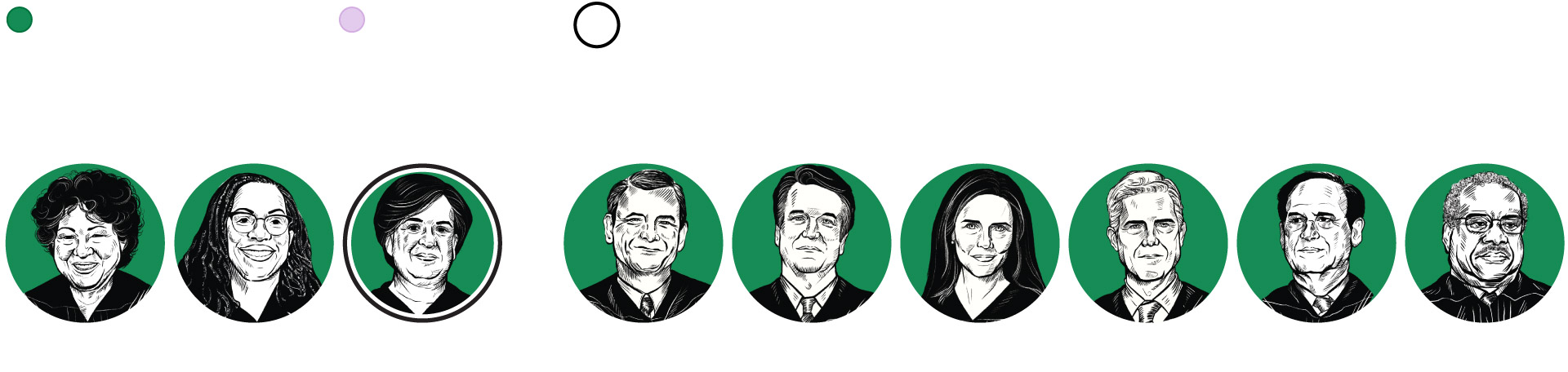
What they ruled: Workers can pursue employment discrimination claims over job transfers without having to show that the involuntary move caused a “significant disadvantage,” such as harm to career prospects or a change in salary or rank.
Why it matters: Some lower courts had ruled that employees must show they suffered significant harm from a job transfer to successfully lodge a discrimination complaint under Title VII, a federal civil rights law. In unanimously ruling on April 17 on behalf of a female police sergeant in St. Louis who said she was reassigned to a less prestigious role because she is a woman, the Supreme Court lowered that bar. Employees still have to show they experienced some harm.
Blocking critics on social media
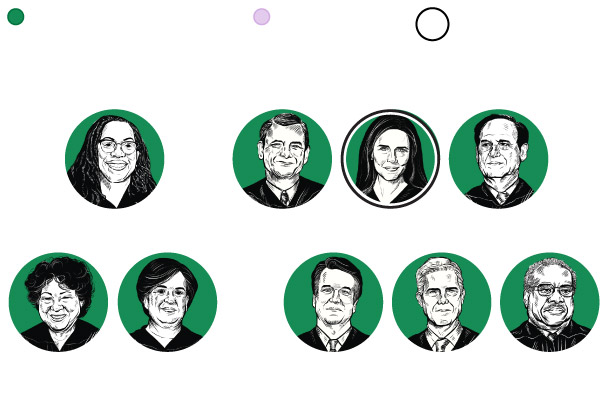
O’Connor-Ratcliff v. Garnier and Lindke v. Freed
Joined the majority
Dissented
Decision author
LIBERAL BLOC
CONSERVATIVE BLOC
Jackson
Roberts
Barrett
Alito
Kagan
Kavanaugh
Thomas
Gorsuch
Sotomayor
Joined the majority
Dissented
Decision author
LIBERAL BLOC
CONSERVATIVE BLOC
Jackson
Roberts
Barrett
Alito
Kagan
Kavanaugh
Thomas
Gorsuch
Sotomayor
Joined the majority
Dissented
Decision author
LIBERAL BLOC
CONSERVATIVE BLOC
Sotomayor
Jackson
Kagan
Roberts
Kavanaugh
Barrett
Gorsuch
Alito
Thomas
Joined the majority
Dissented
Decision author
LIBERAL BLOC
CONSERVATIVE BLOC
Sotomayor
Jackson
Kagan
Roberts
Kavanaugh
Barrett
Gorsuch
Alito
Thomas
What they ruled: Public officials can be liable for blocking or deleting critics from their social media accounts — but only when they are acting in an official capacity and with “actual authority” to speak on behalf of the government. In a pair of unanimous decisions issued March 15, the court said public officials are still private citizens with their own constitutional rights.
Why it matters: Lower courts have been divided over how to determine when government employees are acting in an official capacity online and are therefore bound by First Amendment restrictions on censorship, and when they are acting as private citizens, with individual free-speech rights. The Supreme Court decisions set the rules for interactions between the government and its citizens, who are increasingly relying on popular social media platforms to access public officials and critical community information.
Donald Trump ballot eligibility
Donald Trump v. Norma Anderson
Joined the majority
Dissented
LIBERAL BLOC
CONSERVATIVE BLOC
Jackson
Roberts
Barrett
Alito
Kagan
Kavanaugh
Thomas
Gorsuch
Sotomayor
Joined the majority
Dissented
LIBERAL BLOC
CONSERVATIVE BLOC
Jackson
Roberts
Barrett
Alito
Kagan
Kavanaugh
Thomas
Gorsuch
Sotomayor
Joined the majority
Dissented
LIBERAL BLOC
CONSERVATIVE BLOC
Sotomayor
Jackson
Kagan
Roberts
Kavanaugh
Barrett
Gorsuch
Alito
Thomas
Joined the majority
Dissented
LIBERAL BLOC
CONSERVATIVE BLOC
Sotomayor
Jackson
Kagan
Roberts
Kavanaugh
Barrett
Gorsuch
Alito
Thomas
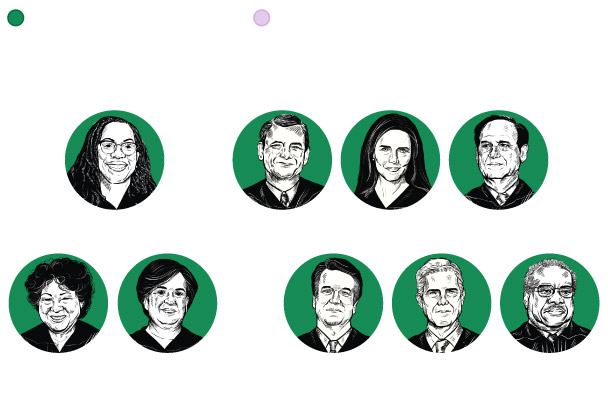
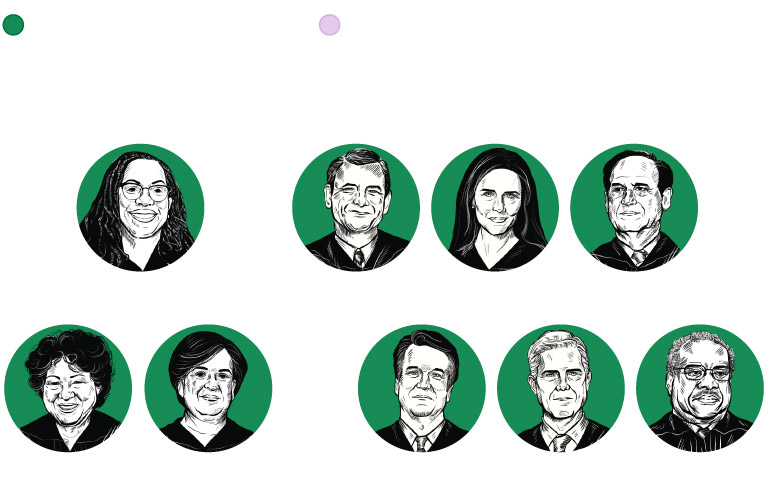
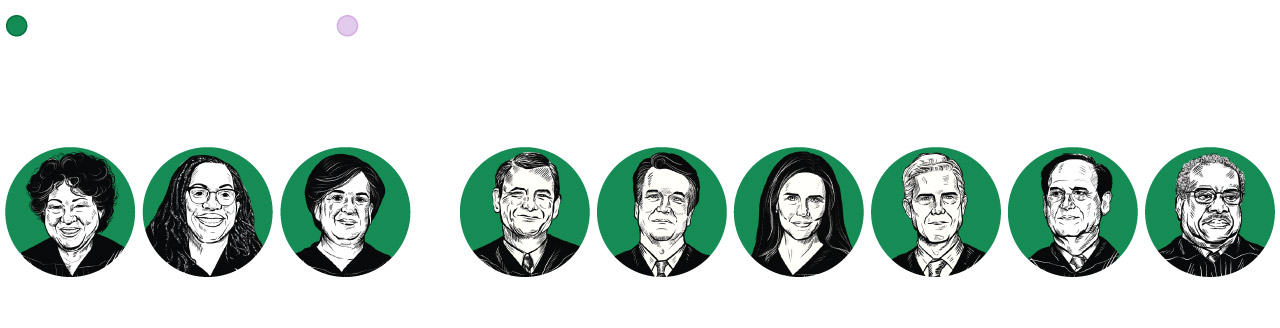
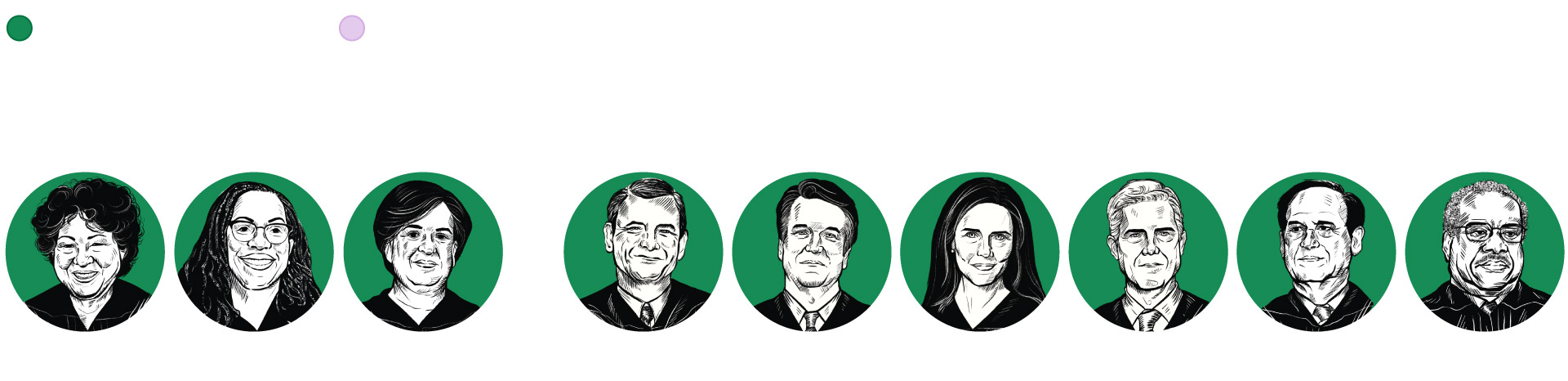
What they ruled: Colorado cannot disqualify Trump from election ballots because of his actions before and during the Jan. 6, 2021, attack on the Capitol. In a decision issued March 4, the justices said the Constitution does not permit a single state to bar a presidential candidate from national office, declaring that such responsibility “rests with Congress and not the states.”
Why it matters: The Colorado Supreme Court and judges or officials in a few other states had ruled that Trump could be barred from returning to office under Section 3 of the 14th Amendment to the U.S. Constitution. The post-Civil War era provision was intended to prevent Confederate leaders from returning to positions of power and has rarely been invoked in modern times. Had it been applied to Trump, who is again running for president, it would have upended the 2024 election by keeping the Republican front-runner off the ballot.
Prosecuting Trump for trying to block the 2020 election results
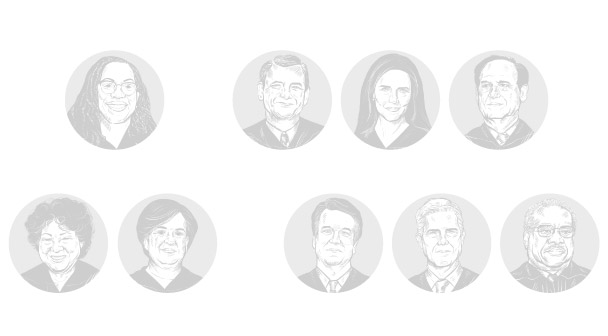
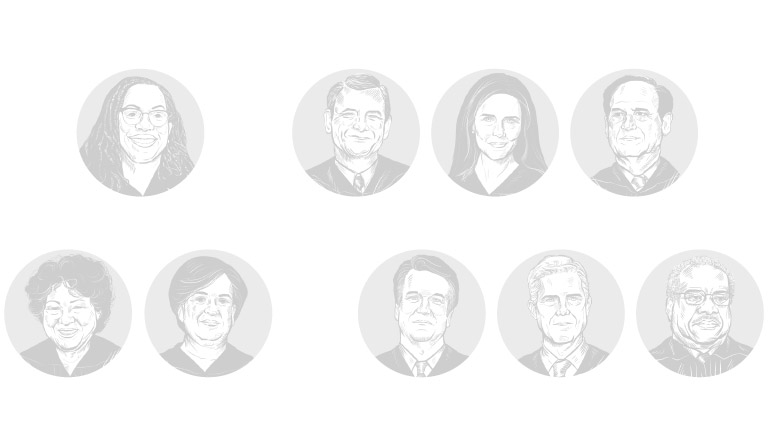
Trump v. United States
LIBERAL BLOC
CONSERVATIVE BLOC
Jackson
Roberts
Barrett
Alito
Kagan
Kavanaugh
Thomas
Gorsuch
Sotomayor
LIBERAL BLOC
CONSERVATIVE BLOC
Jackson
Roberts
Barrett
Alito
Kagan
Kavanaugh
Thomas
Gorsuch
Sotomayor

LIBERAL BLOC
CONSERVATIVE BLOC
Sotomayor
Jackson
Kagan
Roberts
Kavanaugh
Barrett
Gorsuch
Alito
Thomas

LIBERAL BLOC
CONSERVATIVE BLOC
Sotomayor
Jackson
Kagan
Roberts
Kavanaugh
Barrett
Gorsuch
Alito
Thomas
Oral argument: Held April 25
What’s at stake: Whether Trump is immune from prosecution for his alleged efforts to stay in power by overturning Joe Biden’s election victory.
Background: Trump’s unprecedented claim that presidents cannot be criminally charged for acts they undertook while in the White House will directly impact whether he goes on trial in D.C. on election-obstruction charges. It could also affect his separate trials in Florida and Georgia. At oral argument, the justices appeared ready to say Trump can be prosecuted but rule in a way that requires more pretrial action from lower courts, further delaying his stalled trial in the nation’s capital.
Charging Jan. 6 rioters and Trump with obstruction
Fischer v. U.S.
LIBERAL BLOC
CONSERVATIVE BLOC
Jackson
Roberts
Barrett
Alito
Kagan
Kavanaugh
Thomas
Gorsuch
Sotomayor
LIBERAL BLOC
CONSERVATIVE BLOC
Jackson
Roberts
Barrett
Alito
Kagan
Kavanaugh
Thomas
Gorsuch
Sotomayor
LIBERAL BLOC
CONSERVATIVE BLOC
Sotomayor
Jackson
Kagan
Roberts
Kavanaugh
Barrett
Gorsuch
Alito
Thomas
LIBERAL BLOC
CONSERVATIVE BLOC
Sotomayor
Jackson
Kagan
Roberts
Kavanaugh
Barrett
Gorsuch
Alito
Thomas
Oral argument: Held April 16
What’s at stake: Whether prosecutors properly charged hundreds of Jan. 6 defendants and Trump using a law that makes it a crime to obstruct or impede an official proceeding — in this case, the disruption of Congress’s certification of Biden’s 2020 election victory.
Background: The case concerns whether a law written in the wake of the Enron scandal, which involved document-shredding by the company’s accountants, can be used to prosecute some of the Jan. 6 rioters. At oral argument, the court appeared deeply divided, with several conservatives quite skeptical of the government’s decision to charge participants under the law.
Guns for suspected domestic abusers
U.S. v. Rahimi
LIBERAL BLOC
CONSERVATIVE BLOC
Jackson
Roberts
Barrett
Alito
Kagan
Kavanaugh
Thomas
Gorsuch
Sotomayor
LIBERAL BLOC
CONSERVATIVE BLOC
Jackson
Roberts
Barrett
Alito
Kagan
Kavanaugh
Thomas
Gorsuch
Sotomayor
LIBERAL BLOC
CONSERVATIVE BLOC
Sotomayor
Jackson
Kagan
Roberts
Kavanaugh
Barrett
Gorsuch
Alito
Thomas
LIBERAL BLOC
CONSERVATIVE BLOC
Sotomayor
Jackson
Kagan
Roberts
Kavanaugh
Barrett
Gorsuch
Alito
Thomas
Oral argument: Held Nov. 7
What’s at stake: Whether a law disarming individuals subject to domestic-violence protective orders violates the Second Amendment.
Background: At oral argument in November, the justices seemed poised to allow the ban on gun possession for people who are subject to domestic-violence protective orders. Such a decision would be among the first to show the limits of New York State Rifle & Pistol Assoc. v. Bruen, the court’s historic 2022 decision expanding the rights of gun owners. It requires the government to point to historical analogues when defending gun restrictions.
Garland v. Cargill
LIBERAL BLOC
CONSERVATIVE BLOC
Jackson
Roberts
Barrett
Alito
Kagan
Kavanaugh
Thomas
Gorsuch
Sotomayor
LIBERAL BLOC
CONSERVATIVE BLOC
Jackson
Roberts
Barrett
Alito
Kagan
Kavanaugh
Thomas
Gorsuch
Sotomayor
LIBERAL BLOC
CONSERVATIVE BLOC
Sotomayor
Jackson
Kagan
Roberts
Kavanaugh
Barrett
Gorsuch
Alito
Thomas
LIBERAL BLOC
CONSERVATIVE BLOC
Sotomayor
Jackson
Kagan
Roberts
Kavanaugh
Barrett
Gorsuch
Alito
Thomas
Oral argument: Held Feb. 28
What’s at stake: Whether a federal ban on bump stocks — which, when attached to rifles, speed up how quickly bullets can be fired — is permitted under federal law.
Background: The Trump administration announced the ban after a Las Vegas gunman used the devices in 2017 to kill dozens of people in the deadliest mass shooting in modern U.S. history. The Biden administration is defending the rule, asserting that bump stocks fit the legal definition of machine guns, banned since 1986. At oral argument, several justices expressed concern about the carnage bump stocks can bring. But they were divided on whether the machine gun ban applies to the devices.
Idaho v. U.S.
LIBERAL BLOC
CONSERVATIVE BLOC
Jackson
Roberts
Barrett
Alito
Kagan
Kavanaugh
Thomas
Gorsuch
Sotomayor
LIBERAL BLOC
CONSERVATIVE BLOC
Jackson
Roberts
Barrett
Alito
Kagan
Kavanaugh
Thomas
Gorsuch
Sotomayor
LIBERAL BLOC
CONSERVATIVE BLOC
Sotomayor
Jackson
Kagan
Roberts
Kavanaugh
Barrett
Gorsuch
Alito
Thomas
LIBERAL BLOC
CONSERVATIVE BLOC
Sotomayor
Jackson
Kagan
Roberts
Kavanaugh
Barrett
Gorsuch
Alito
Thomas
Oral argument: Held April 24
What’s at stake: Whether a federal law requiring emergency room care for life-threatening cases means ER doctors in states with strict abortion bans must nevertheless terminate pregnancies in certain circumstances.
Background: After the Supreme Court eliminated the nationwide right to abortion in 2022, the Biden administration turned to a Medicare law as a narrow way to challenge state-level abortion bans in federal court. The Emergency Medical Treatment and Active Labor Act requires hospitals receiving Medicare funds to treat or transfer patients with emergency medical conditions regardless of ability to pay. At oral argument, the conservative justices expressed skepticism that the law requires hospitals to provide emergency abortion care in states with strict bans on the procedure.
Limits on social media posts
NetChoice, LLC v. Paxton and Moody v. NetChoice, LLC
LIBERAL BLOC
CONSERVATIVE BLOC
Jackson
Roberts
Barrett
Alito
Kagan
Kavanaugh
Thomas
Gorsuch
Sotomayor
LIBERAL BLOC
CONSERVATIVE BLOC
Jackson
Roberts
Barrett
Alito
Kagan
Kavanaugh
Thomas
Gorsuch
Sotomayor
LIBERAL BLOC
CONSERVATIVE BLOC
Sotomayor
Jackson
Kagan
Roberts
Kavanaugh
Barrett
Gorsuch
Alito
Thomas
LIBERAL BLOC
CONSERVATIVE BLOC
Sotomayor
Jackson
Kagan
Roberts
Kavanaugh
Barrett
Gorsuch
Alito
Thomas
Oral argument: Held Feb. 26
Background: At oral argument, justices seemed skeptical that the First Amendment permits state governments to set rules for how social media companies such as Facebook and YouTube curate content. Even as justices expressed concern about the power of the platforms over public debate, a majority appeared likely to block Texas and Florida laws passed in 2021. The court’s review of the laws is the highest-profile examination to date of allegations that Silicon Valley companies illegally censor conservative viewpoints.
White House asking social media companies to remove misinformation
Murthy v. Missouri
LIBERAL BLOC
CONSERVATIVE BLOC
Jackson
Roberts
Barrett
Alito
Kagan
Kavanaugh
Thomas
Gorsuch
Sotomayor
LIBERAL BLOC
CONSERVATIVE BLOC
Jackson
Roberts
Barrett
Alito
Kagan
Kavanaugh
Thomas
Gorsuch
Sotomayor
LIBERAL BLOC
CONSERVATIVE BLOC
Sotomayor
Jackson
Kagan
Roberts
Kavanaugh
Barrett
Gorsuch
Alito
Thomas
LIBERAL BLOC
CONSERVATIVE BLOC
Sotomayor
Jackson
Kagan
Roberts
Kavanaugh
Barrett
Gorsuch
Alito
Thomas
Oral argument: Held March 18
What’s at stake: Whether the Biden administration violated the First Amendment in its contacts with social media companies about public health and election misinformation.
Background: At oral argument, the justices seemed poised to reject the Republican-led effort to sharply limit the federal government from pressuring social media companies to remove harmful posts and misinformation from their platforms. Republican attorneys general in Louisiana and Missouri initiated the lawsuit, which raised significant and novel questions about how free-speech protections apply online.
Power of federal agencies
Loper Bright Enterprises v. Raimondo and Relentless, Inc. v. Dept. of Commerce
LIBERAL BLOC
CONSERVATIVE BLOC
Jackson
Roberts
Barrett
Alito
Kagan
Kavanaugh
Thomas
Gorsuch
Sotomayor
LIBERAL BLOC
CONSERVATIVE BLOC
Jackson
Roberts
Barrett
Alito
Kagan
Kavanaugh
Thomas
Gorsuch
Sotomayor
LIBERAL BLOC
CONSERVATIVE BLOC
Sotomayor
Jackson
Kagan
Roberts
Kavanaugh
Barrett
Gorsuch
Alito
Thomas
LIBERAL BLOC
CONSERVATIVE BLOC
Sotomayor
Jackson
Kagan
Roberts
Kavanaugh
Barrett
Gorsuch
Alito
Thomas
Oral argument: Held Jan. 17
What’s at stake: Whether courts must continue to defer to the reasonable interpretations of agency officials enforcing ambiguous federal statutes. Conservatives concerned about the power of the administrative state want to limit the discretion of agency officials and allow courts to interpret laws regulating the environment, the workplace, public health and financial markets.
Background: The court is being asked to overturn a long-standing precedent that set the framework for evaluating agency action known as “Chevron deference,” from a 1984 case, Chevron U.S.A. v. Natural Resources Defense Council. While the Supreme Court has not invoked Chevron in recent years, lower courts still rely on it. The court’s conservative majority seemed inclined during argument to overturn or significantly scale back Chevron, which could weaken the government’s ability to regulate vast swaths of American life.
Securities and Exchange Commission v. Jarkesy
LIBERAL BLOC
CONSERVATIVE BLOC
Jackson
Roberts
Barrett
Alito
Kagan
Kavanaugh
Thomas
Gorsuch
Sotomayor
LIBERAL BLOC
CONSERVATIVE BLOC
Jackson
Roberts
Barrett
Alito
Kagan
Kavanaugh
Thomas
Gorsuch
Sotomayor
LIBERAL BLOC
CONSERVATIVE BLOC
Sotomayor
Jackson
Kagan
Roberts
Kavanaugh
Barrett
Gorsuch
Alito
Thomas
LIBERAL BLOC
CONSERVATIVE BLOC
Sotomayor
Jackson
Kagan
Roberts
Kavanaugh
Barrett
Gorsuch
Alito
Thomas
Oral argument: Held Nov. 29
What’s at stake: Whether in-house legal proceedings used by the Securities and Exchange Commission to discipline those accused of committing fraud are unconstitutional.
Background: A lower court ruled the SEC’s in-house tribunals violate the Constitution’s Seventh Amendment right to a jury trial, that Congress exceeded its power in allowing such tribunals and that the job security provided to administrative law judges who hear such cases infringed on the executive branch’s prerogatives. A broad decision could cast doubt on the work administrative law judges do across the federal government, but the justices critical of the SEC procedures seemed to be looking for a more narrow resolution during oral argument.
Opioid lawsuit settlement
Harrington v. Purdue Pharma
LIBERAL BLOC
CONSERVATIVE BLOC
Jackson
Roberts
Barrett
Alito
Kagan
Kavanaugh
Thomas
Gorsuch
Sotomayor
LIBERAL BLOC
CONSERVATIVE BLOC
Jackson
Roberts
Barrett
Alito
Kagan
Kavanaugh
Thomas
Gorsuch
Sotomayor
LIBERAL BLOC
CONSERVATIVE BLOC
Sotomayor
Jackson
Kagan
Roberts
Kavanaugh
Barrett
Gorsuch
Alito
Thomas
LIBERAL BLOC
CONSERVATIVE BLOC
Sotomayor
Jackson
Kagan
Roberts
Kavanaugh
Barrett
Gorsuch
Alito
Thomas
Oral argument: Held Dec. 4
What’s at stake: The legality of a proposed Purdue Pharma bankruptcy plan that would allocate billions of dollars to help ease the nation’s opioid crisis but shield the family that owns the company from future lawsuits.
Background: The legal issue before the court is whether, according to federal bankruptcy laws, the Sackler family can be spared from future opioid-related litigation by those who do not consent to give up their rights to sue. Purdue attorneys and the vast number of parties that agreed to the deal see it as the best hope of ending years of legal disputes and recovering at least a portion of their claims. The Justice Department opposes the plan and says another settlement could be worked out that doesn’t necessarily involve releases or bankruptcy.
Homeless encampments in public spaces
City of Grants Pass, Oregon v. Gloria Johnson
LIBERAL BLOC
CONSERVATIVE BLOC
Jackson
Roberts
Barrett
Alito
Kagan
Kavanaugh
Thomas
Gorsuch
Sotomayor
LIBERAL BLOC
CONSERVATIVE BLOC
Jackson
Roberts
Barrett
Alito
Kagan
Kavanaugh
Thomas
Gorsuch
Sotomayor
LIBERAL BLOC
CONSERVATIVE BLOC
Sotomayor
Jackson
Kagan
Roberts
Kavanaugh
Barrett
Gorsuch
Alito
Thomas
LIBERAL BLOC
CONSERVATIVE BLOC
Sotomayor
Jackson
Kagan
Roberts
Kavanaugh
Barrett
Gorsuch
Alito
Thomas
Oral argument: Held April 22
Background: A lower court declared it unconstitutional to enforce anti-camping laws against homeless individuals when they have nowhere else to sleep. Democratic leaders in cities on the West Coast say the ruling has made it more difficult to address safety and public health risks created by tents and makeshift structures. At oral argument, the justices expressed concern about punishing homeless people for sleeping outside when they have nowhere else to go, while also struggling with how to ensure local and state leaders have flexibility to deal with the growing number of unhoused individuals nationwide.
Moore v. U.S.
LIBERAL BLOC
CONSERVATIVE BLOC
Jackson
Roberts
Barrett
Alito
Kagan
Kavanaugh
Thomas
Gorsuch
Sotomayor
LIBERAL BLOC
CONSERVATIVE BLOC
Jackson
Roberts
Barrett
Alito
Kagan
Kavanaugh
Thomas
Gorsuch
Sotomayor
LIBERAL BLOC
CONSERVATIVE BLOC
Sotomayor
Jackson
Kagan
Roberts
Kavanaugh
Barrett
Gorsuch
Alito
Thomas
LIBERAL BLOC
CONSERVATIVE BLOC
Sotomayor
Jackson
Kagan
Roberts
Kavanaugh
Barrett
Gorsuch
Alito
Thomas
Oral argument: Held Dec. 5
What’s at stake: A challenge to a provision of Trump’s 2017 tax package. Experts say invalidating the provision could destabilize the nation’s tax system and preemptively block Congress from creating a wealth tax.
Background: The justices are considering whether a one-time tax on offshore earnings that helped pay for Trump’s massive tax cuts is permitted under the limited powers of taxation that the Constitution grants Congress. At oral argument, justices from across the ideological spectrum seemed skeptical of the challenge brought by a Washington state couple and backed by an anti-regulatory advocacy group.
Downwind industrial pollution
Ohio v. EPA, Kinder Morgan Inc. v. EPA, American Forest & Paper Assn. v. EPA, U.S. Steel Corp. v. EPA
LIBERAL BLOC
CONSERVATIVE BLOC
Jackson
Roberts
Barrett
Alito
Kagan
Kavanaugh
Thomas
Gorsuch
Sotomayor
LIBERAL BLOC
CONSERVATIVE BLOC
Jackson
Roberts
Barrett
Alito
Kagan
Kavanaugh
Thomas
Gorsuch
Sotomayor
LIBERAL BLOC
CONSERVATIVE BLOC
Sotomayor
Jackson
Kagan
Roberts
Kavanaugh
Barrett
Gorsuch
Alito
Thomas
LIBERAL BLOC
CONSERVATIVE BLOC
Sotomayor
Jackson
Kagan
Roberts
Kavanaugh
Barrett
Gorsuch
Alito
Thomas
Oral argument: Feb. 21
What’s at stake: The court is reviewing the Biden administration’s plan to limit smog-forming pollutants from power plants and other industrial facilities that cause problems for their downwind neighbors in other states.
Background: At oral argument, the conservative majority seemed poised to halt the Environmental Protection Agency’s effort to cut emissions from power plants and factories to reduce pollution that blows into neighboring states, a setback to an ambitious federal initiative to cut lung-damaging smog. The initiative was challenged by three Republican-governed states and industry groups, who said they could not bear the cost and questioned whether the program would work, especially because some states have been excluded by other legal challenges.
Robert Barnes and Justin Jouvenal contributed to this report. Justice illustrations by Shelly Tan.









 English (US)