
 2 years ago
131
EAST RUTHERFORD, N.J. — The U.S. men’s national soccer team had been eliminated for more than a week by the time Argentina took the field against an upstart Canadian squad in Tuesday night’s Copa América semifinal at MetLife Stadium. Yet the match featured a native son trying to solve the Lionel Messi-led World Cup champions all the same.
For Canada Coach Jesse Marsch, the onetime U.S. midfielder who played college soccer at Princeton an hour down the New Jersey Turnpike and coached the New York Red Bulls from 2015 to 2018, the 2-0 loss capped a run that can be interpreted as both a telling bellwether and an undeniable boon.
By advancing to Copa América’s final four and hanging with the World Cup champions for the second time in three weeks, Canada showcased its ascent to soccer respectability. By failing to score for the second straight meeting with Argentina and exiting the tournament with two goals in five matches, the Canadians also put their shortcomings on display.
“I know that they’re very disappointed, but I’m very proud of them,” Marsch said. “We’ve had a wonderful five weeks together, six weeks together, and it’s gone way better than any of us could have scripted. So there’s still a lot of work to do, but we’ve built a really good foundation.”
Argentina, meanwhile, cleared the last hurdle on the path to its sixth Copa América final in the past eight tournaments. Powered by Julián Álvarez’s early opener and Messi’s second-half insurance tally, Argentina bewitched an announced crowd of 80,102 and moved to 17-1-1 since lifting the World Cup in 2022.
La Albiceleste will face the winner of Wednesday’s semifinal between Colombia and Uruguay for the title Sunday night at Hard Rock Stadium in Miami Gardens, Fla.
“It is harder and harder, and the bar is up high,” Argentina Coach Lionel Scaloni said, via an interpreter, of reaching another title game. “Everyone thinks it is very easy and straightforward, and Canada has shown today that it is not an easy task.”
Tuesday was a rematch after Argentina opened the tournament — a special edition of South America’s revered championship, expanded to feature six guests from North and Central America and the Caribbean — with a tenacious 2-0 win over Canada in Atlanta. Once the teams advanced from Group A, they each survived a quarterfinal shootout last week as Argentina edged Ecuador in Houston and Canada ousted Venezuela in Arlington, Tex.
Restored to the lineup after consecutive games as a substitute, Álvarez took 22 minutes to repay Scaloni’s faith. Finding space between Canada’s center backs, Álvarez deftly collected a clipped pass from Rodrigo De Paul and sneaked a shot through goalkeeper Maxime Crépeau’s legs to put Argentina on top.
After limiting further damage before halftime, Canada saw its deficit double in the 51st minute. As Enzo Fernández fired a low bid from the top of the box, Messi slipped through traffic and deflected the shot past Crépeau for his first goal of the tournament. Canadian players promptly appealed for a flag, but replays showed defender Derek Cornelius keeping Messi onside.
Canada ratcheted up the pressure down the stretch but lost its most dynamic weapon when Bayern Munich left back Alphonso Davies limped off with 18 minutes remaining. The renewed intensity only produced cautions as Stephen Eustáquio and Ismaël Koné picked up yellow cards for hard fouls.
“It wasn’t as easy to slice through our team as it was the first game, so I thought that we were more stable defensively, but I think that the tournament caught up with us a little bit,” Marsch said. “I think we just lacked efficiency in the final third.”
To Marsch, who was coaching just his seventh match in charge of Canada, the semifinal appearance still offered personal vindication. Boasting a résumé featuring head coaching stints in the German Bundesliga and the English Premier League, Marsch failed to land the U.S. men’s national team job last summer when the U.S. Soccer Federation instead chose to reappoint Gregg Berhalter. Now, with Berhalter’s fate up in the air following the Americans’ calamitous group-stage exit, Marsch can count a deep Copa América run as a feather in his cap.
Ranked 48th by FIFA, the Canadians were considerable underdogs against their top-ranked opponent Tuesday. Argentina has three World Cup titles; Canada has only qualified for the World Cup twice. Argentina is pursuing its 16th Copa América crown; Canada has won its less-competitive regional tournament, the Concacaf Gold Cup, just once.
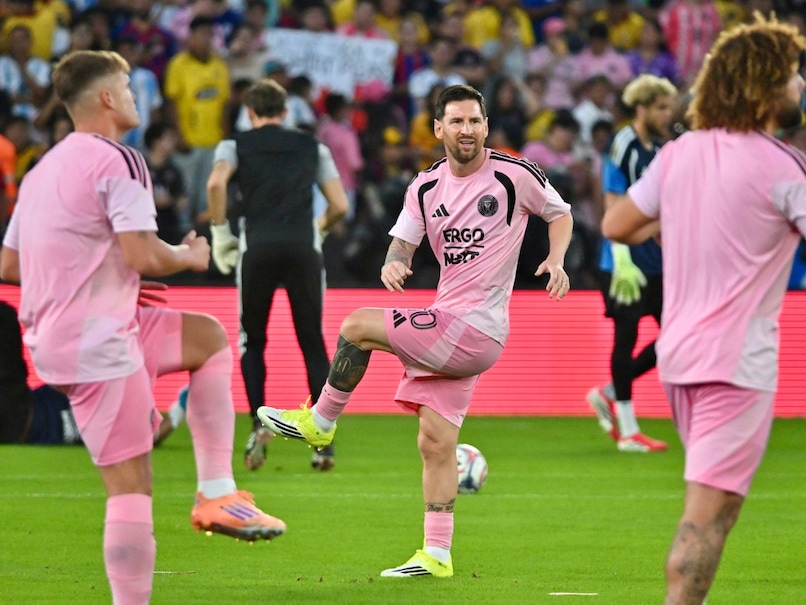
It was apparent well before kickoff that Argentina would enjoy a home-field advantage some 5,000 miles from Buenos Aires. The odd Canadian kit stuck out in a sea of Argentine blue and white, and many of the jersey outliers — Barcelona garnet and blue, Inter Miami pink — belonged to Messi devotees. Moments after the Canadians were greeted by shrill whistles as they took the field for warmups, their Argentine counterparts earned an enthusiastic ovation.
Messi may have reversed the snake-bitten narrative that long hounded him in an Argentine jersey by winning the World Cup and the 2021 Copa América, but this victory represented MetLife Stadium redemption. The last time Messi played a knockout game here, he missed his penalty kick in Argentina’s shootout loss to Chile in the 2016 Copa América final — a setback that extended Argentina’s decades-long title drought and led Messi to briefly question whether he still wanted to represent his country.
If Argentina and, perhaps, a 39-year-old Messi plan to return to this stadium for the 2026 World Cup final in just over two years, they’ll do so with the knowledge that their demons in New York City’s shadow have at last been exorcised. And they just might do so in search of a fourth straight major title.
“It is extremely tough to reach another final,” Scaloni said. “We know how hard it is to get there.”




 English (US)